



Androgen Receptor
Androgen receptor (AR) is a type of nuclear receptor that is activated by binding of either of the androgenic hormones testosterone or dihydrotestosterone in the cytoplasm and then translocating into the nucleus. Upon binding the hormone ligand, the receptor dissociates from accessory proteins, translocates into the nucleus, dimerizes, and then stimulates transcription of androgen responsive genes. The androgen receptor is most closely related to the progesterone receptor, and progestins in higher dosages can block the androgen receptor. The main function of the androgen receptor is as a DNA-binding transcription factor that regulates gene expression. Androgen regulated genes are critical for the development and maintenance of the male sexual phenotype. Mutations in this gene are also associated with complete androgen insensitivity (CAIS).
All Product Categories
-
Androgen Receptor Inhibitors
(127)
View all products
-
Androgen Receptor Agonists
(27)
View all products
-
Androgen Receptor Antagonists
(147)
View all products
-
Androgen Receptor Activators
(3)
View all products
-
Androgen Receptor Modulators
(39)
View all products
-
Androgen Receptor Inducer
(1)
View all products
-
Androgen Receptor Degraders
(52)
View all products
-
Androgen Receptor Controls
(3)
View all products
-
Androgen Receptor Ligands
(25)
View all products
-
Androgen Receptor Proteins
(1)
View all products
-
Androgen Receptor Related Products (480)
Related Products (480)

-
Recombinant Proteins (1)
-
Antibodies (2)

-
Sulfamethizole-d4
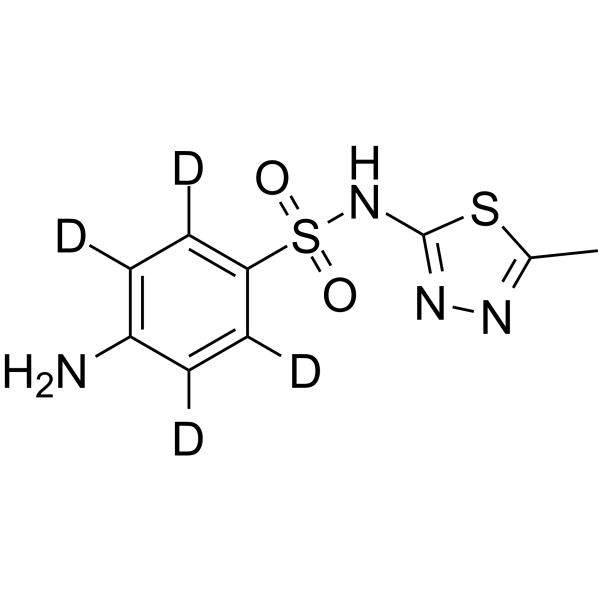 0 ImagesCat. No.: HY-B0333SSulfamethizole-d4 is the deuterium labeled Sulfamethizole (HY-B0333). Sulfamethizole is a sulfathiazole antibiotic. Sulfamethizole inhibits the synthesis of folic acid and thymine, and selectively suppresses Photobacterium phosphoreum bioluminescence. Sulfamethizole exerts antibacterial activity against Escherichia coli-mediated urinary tract infections but no activity against sulII gene-positive Escherichia coli. Sulfamethizole is applicable for the research of urinary tract infections and Photobacterium phosphoreum bioluminescence mechanisms.
-
CSRM617 (Standard)
 0 ImagesCat. No.: HY-122611RCAS No.: 787504-88-5CSRM617 (Standard) is the analytical standard of CSRM617. This product is intended for research and analytical applications. CSRM617 is a selective small-molecule inhibitor of the transcription factor ONECUT2 (OC2, a master regulator of androgen receptor) with a Kd of 7.43 uM in SPR assays, binding to OC2-HOX domain directly. CSRM617 induces apoptosis by appearance of cleaved Caspase-3 and PARP. CSRM617 is well tolerated in the prostate cancer mouse model
-
UT-105
 0 ImagesCat. No.: HY-182722CAS No.: 2388536-21-6UT-105 is an orally active, selective androgen receptor (AR) degrader. UT-105 binds to the N-terminal domain of AR, inhibits the transactivation of AR, blocks the recruitment of AR to androgen response elements, and induces AR degradation. UT-105 inhibits the JAK-STAT signaling pathway, including reducing the expression of interferon-stimulated genes, inhibiting the phosphorylation of STAT1 and STAT3, and blocking the recruitment of STAT1 to response elements. UT-105 exhibits anticancer activity against AR-positive triple-negative breast cancer (TNBC). UT-105 can be used in the research of selective androgen receptor modulator-resistant ER-positive breast cancer and triple-negative breast cancer.
-
Sulfamethizole-d4-1
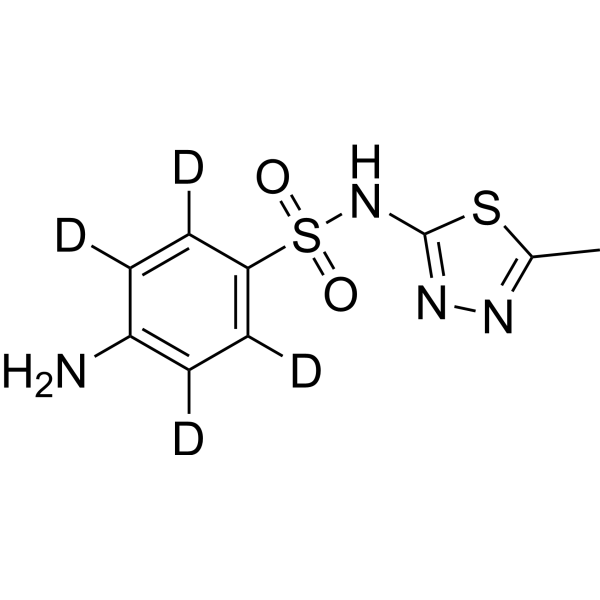 0 ImagesCat. No.: HY-B0333S2CAS No.: 2470130-12-0Sulfamethizole-d4-1 is the deuterium labeled Sulfamethizole (HY-B0333). Sulfamethizole is a sulfathiazole antibiotic. Sulfamethizole inhibits the synthesis of folic acid and thymine, and selectively suppresses Photobacterium phosphoreum bioluminescence. Sulfamethizole exerts antibacterial activity against Escherichia coli-mediated urinary tract infections but no activity against sulII gene-positive Escherichia coli. Sulfamethizole is applicable for the research of urinary tract infections and Photobacterium phosphoreum bioluminescence mechanisms.
-
Prochloraz-d7
 0 ImagesCat. No.: HY-W716464Synonyms: BTS 40542-d7Prochloraz-d7 (BTS 40542-d7) is the deuterium labeled Prochloraz (HY-B0845). Prochloraz is an imidazole antifungal. Prochloraz is as an estrogen receptor (ER) and androgen receptor (AR) antagonist and an aromatase inhibitor with IC50 values of 25 μM, 4 μM and 0.3 μM, respectively. Prochloraz is able to activate the aryl hydrocarbon receptor (AhR) having an EC50 of 1 μM.
-
Androstatrione
 0 ImagesCat. No.: HY-W745855CAS No.: 100024-35-9Androstatrione is an androgenic compound.
-
Trimegestone
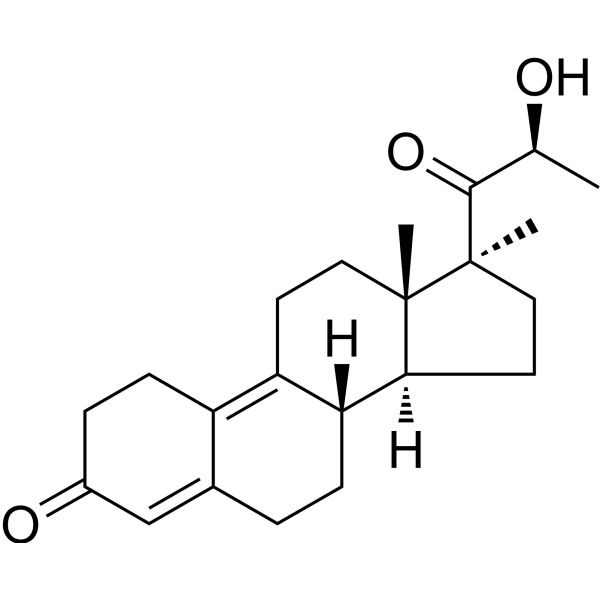 0 ImagesCat. No.: HY-106827CAS No.: 74513-62-5Synonyms: RU 27987Trimegestone (RU 27987) is an orally active, selective progestogen and PR ligand, with an IC50 of 7.6 nM for hPR, 4.4 nM for rabbit PR, and 3.3 nM for rat PR. Trimegestone induces Alkaline phosphatase activity. Trimegestone exhibits antiandrogenic activity (IC50 = 303 nM). Trimegestone can be used in research related to menopausal symptoms and osteoporosis.
-
Acetyl-ACTH (2-24) (human, bovine, rat)
 0 ImagesCat. No.: HY-P4779CAS No.: 1815617-98-1Acetyl-ACTH (2-24) (human, bovine, rat) is a fragment of proopiomelanocortin (POMC) peptide. POMC peptides such as adrenocorticotrophin (ACTH), which is the precursor of α-MSH, is also an agonist at the MC-1 receptor.
-
VNPP433-3β dihydrochloride
 0 ImagesCat. No.: HY-160777ACAS No.: 3026905-92-7Synonyms: Galeterone 3β-imidazole dihydrochlorideVNPP433-3β (Galeterone 3β-imidazole) dihydrochloride is an orally active molecular glue degrader, which degrades androgen receptor (AR) and its splice variants (AR-Vs) and MAP kinase-interacting serine/threonine protein kinase Mnk1/2. VNPP433-3β dihydrochloride induces cell apoptosis. VNPP433-3β dihydrochloride inhibits tumor growth in the CWR22Rv1 xenograft mouse model. VNPP433-3β dihydrochloride can be used for the study of castration resistant prostate cancer (CRPC) and pancreatic ductal adenocarcinoma (PDAC).
-
Isosilybin A (Standard)
 0 ImagesCat. No.: HY-N7043RCAS No.: 142796-21-2Isosilybin A (Standard) is the analytical standard of Isosilybin A (HY-N7043). Isosilybin A is a PPARγ agonist that can be isolated from silymarin. Isosilybin A activates extrinsic and intrinsic pathways of apoptosis through targeting of the Akt-NF-kB-AR axis. Isosilybin A can relieve the inflammatory response in the rosacea model via inhibiting Erk and p38 signaling pathways and M1 macrophage polarization, with its targets related to RELA and VEGFA. Isosilybin A has anti-prostate cancer (PCA) activity[1][2][3].
-
RU 56187
 0 ImagesCat. No.: HY-117486CAS No.: 143782-25-6RU 56187 is an active compound.
-
Chlormadinone-d6
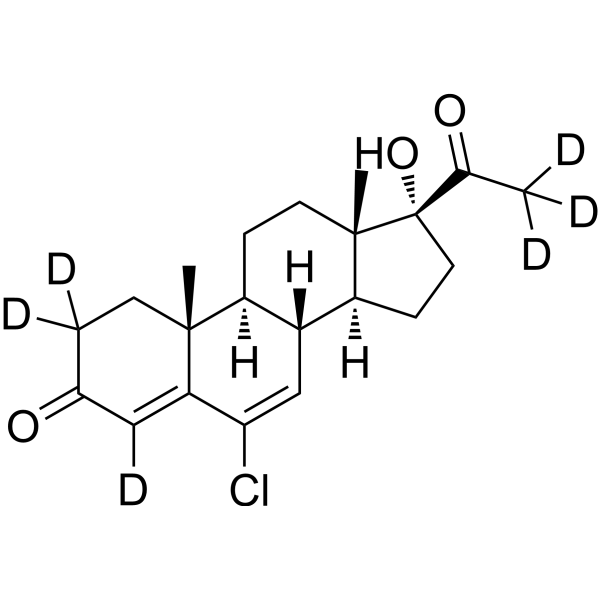 0 ImagesCat. No.: HY-135473SChlormadinone-d6 is the deuterium labeled Chlormadinone (HY-135473). Chlormadinone is an orally active anti-androgen agent. Chlormadinone improves intermittency, terminal dribbling, and urinary stream size and force. Chlormadinone can be used for the research of benign prostatic hyperplasia.
-
(Rac)-GDC-2992
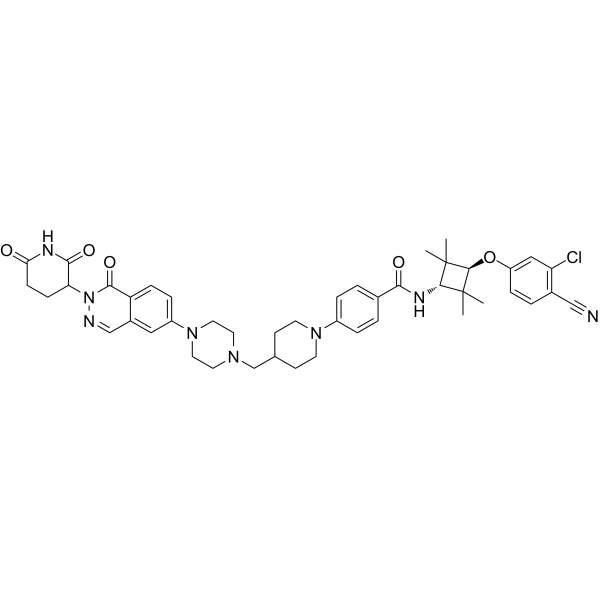 0 ImagesCat. No.: HY-156751CAS No.: 2753650-84-7Synonyms: (Rac)-RO7656594; PROTAC AR Degrader-6(Rac)-GDC-2992 ((Rac)-RO7656594; PROTAC AR Degrader-6) (Compound 1) is an androgen receptor (AR) PROTAC degrader with a DC50 of 10 nM in VCaP cells. (Rac)-GDC-2992 blocks androgen receptor-mediated signaling processes and also degrades the receptor itself. (Rac)-GDC-2992 can be used in prostate cancer research, including studies on castration-resistant prostate cancer and metastatic castration-resistant prostate cancer.
-
AR Degrader-2
 0 ImagesCat. No.: HY-163813CAS No.: 3023359-76-1AR Degrader-2 is a bifunctional androgen receptor degrader that is applicable to cancer-related research.
-
ITRI-90
 0 ImagesCat. No.: HY-171808CAS No.: 2798907-16-9ITRI-90 is an orally effective androgen receptor (AR) PROTAC degrader. ITRI-90 effectively degrades full-length AR (AR-FL) and its splice variant AR-V7 proteins via the ubiquitin-proteasome system, thereby inhibiting AR transcriptional activity and the expression of its target genes, and further inducing tumor cell apoptosis. ITRI-90 can be used in research related to castration-resistant prostate cancer and Enzalutamide (HY-70002)-resistant prostate cancer.
-
AR ligand-48
 0 ImagesCat. No.: HY-179442CAS No.: 1318208-88-6AR ligand-48 is an AR (Androgen Receptor) inhibitor and a ligand for the target protein for PROTAC (AR). AR ligand-48 can be used to synthesize PROTAC AR Degrader-12 (HY-179433).
-
AR ligand-46
 0 ImagesCat. No.: HY-175937CAS No.: 2682256-03-5AR ligand-46 is an androgen receptor (AR) ligand that can be used in studies related to PROTAC synthesis, such as serving as a target protein ligand for A031 (HY-148777).
-
Hydroxyflutamide (Standard)
 0 ImagesCat. No.: HY-W013272RCAS No.: 52806-53-8Synonyms: HFT (Standard)Hydroxyflutamide (Standard) (HFT (Standard)) is the analytical standard of Hydroxyflutamide (HY-W013272). This product is intended for research and analytical applications. Hydroxyflutamide (HFT) is the active metabolite of Flutamide (HY-B0022) and exhibits oral activity. Hydroxyflutamide is a potent androgen receptor antagonist with an IC50 of 700 nM. Hydroxyflutamide can affect embryonic development and reproductive tract development in mice. Additionally, Hydroxyflutamide can enhance the efficacy of Bacillus Calmette-Guérin (BCG) to better inhibit the progression of bladder cancer. Hydroxyflutamide can be used in research related to tumors and reproductive diseases.
-
BWA-6047
 0 ImagesCat. No.: HY-176128BWA-6047 is an oral active PROTAC degrader targeting AR/AR-V7 and GSPT1 with DC50 values of 3.7, 3.0 and 1.2 nM in 22Rv1 cells. BWA-6047 suppresses the expression of AR downstream target genes and and transcriptional activity. BWA-6047 inhibits cancer cells proliferation, causes G1 phase cell cycle arrest and induces apoptosis. BWA-6047 increases cleaved-PARP-1 and cleaved-caspase-3 levels. BWA-6047 reduces growth of LNCaP xenograft tumors in mice models without obvious toxicity. BWA-6047 can be used for the research of prostate cancer.




